For many women, the arrival of a monthly period also brings an unwanted guest: Dysmenorrhea, or period pain. While some experience mild cramping, for others, the pain can be debilitating, affecting work, school, and daily life, as explained by Dr. Gargi Tripathi, Best Gynecologist in Hinjewadi.
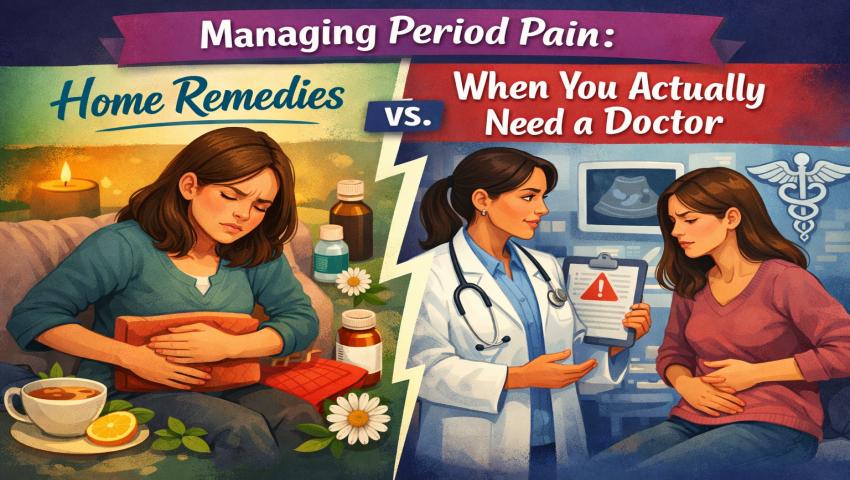
The big question is: Can you handle it at home, or is it time to seek professional help? Here is a guide to help you distinguish between “normal” discomfort and a medical red flag, according to Dr. Gargi Tripathi.
Phase 1: Effective Home Remedies for Mild Cramps
If your pain is manageable and doesn’t stop you from going about your day, these home-based strategies can offer significant relief:
- Heat Therapy: A heating pad or hot water bottle placed on the lower abdomen helps relax the uterine muscles, which are the source of the cramping.
- Gentle Exercise: It sounds counterintuitive when you’re in pain, but walking or light yoga releases endorphins—your body’s natural painkillers.
- Magnesium & Hydration: Drinking plenty of water reduces bloating. Foods rich in magnesium (like bananas, dark chocolate, and leafy greens) can help reduce muscle tension.
- Over-the-Counter (OTC) Relief: Nonsteroidal anti-inflammatory drugs (NSAIDs) like ibuprofen work by lowering the production of prostaglandins, the chemicals that cause the uterus to contract.
Phase 2: When Home Remedies Aren't Enough
Sometimes, the pain is a symptom of an underlying condition rather than just a natural cycle. You should schedule an appointment with a gynecologist if you experience the following:
The Pain is Getting Worse: If your cramps have become significantly more painful over the last few months or years, it could indicate conditions like Endometriosis or Uterine Fibroids. Seeking Irregular Periods Treatment in Hinjewadi at the right time can help diagnose and manage these conditions effectively.
Medication Doesn’t Help: If OTC painkillers provide little to no relief, or if you find yourself taking more than the recommended dose just to get through the day, it’s time for a professional evaluation.
Heavy Bleeding: If you are soaking through a pad or tampon every hour for several hours, or passing large blood clots, this is not “normal” period behavior and needs medical attention.
Pain Outside of Your Period: If you experience pelvic pain during ovulation, during intercourse, or throughout the month, it may be a sign of pelvic inflammatory disease (PID) or ovarian cysts.
What Could the Doctor Find?
When you visit a gynecologist for period pain, they aren’t just looking to give you a stronger pill; they are looking for the cause. Common diagnoses include:
- Endometriosis: When tissue similar to the lining of the uterus grows outside of it.
- PCOS (Polycystic Ovary Syndrome): Hormonal imbalances that can lead to irregular and painful cycles.
- Adenomyosis: When the uterine lining grows into the muscular wall of the uterus.
Summary Table: Should You Call the Doctor?
Final Takeaway:
Your period should be a manageable part of your life, not a monthly crisis. While home remedies are excellent for minor discomfort, they shouldn’t be a “band-aid” for severe pain.
Are your periods holding you back? Listen to your body. If the pain feels like too much, it probably is. Consult a healthcare professional to regain control of your cycle and book an appointment for timely care.