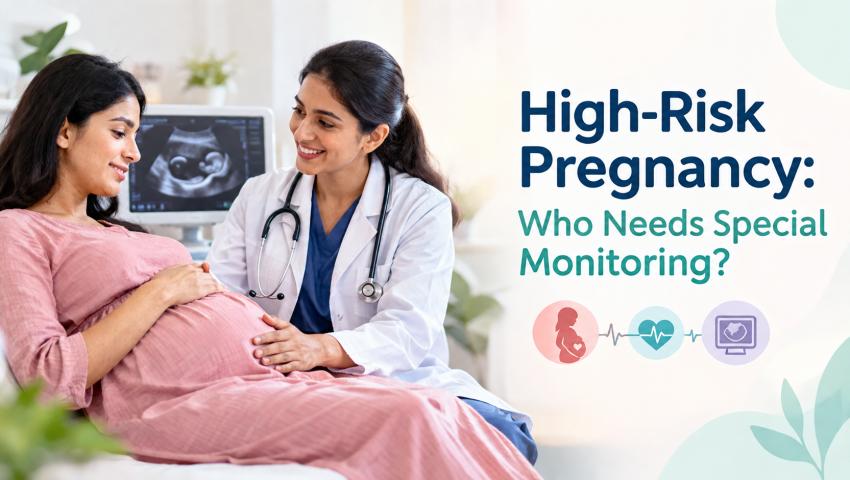
Pregnancy is a happy and special time for every mother. Every family wants a safe nine-month journey and a healthy baby. But if you or your family are wondering about High-Risk Pregnancy: Who Needs Special Monitoring?, it simply means that sometimes a mother or her baby needs extra medical care. Doctors call this condition a High-Risk Pregnancy.
If your doctor says your pregnancy is high-risk, do not worry or panic. It only means you need closer check-ups so that both you and your baby stay completely safe. With the right care and early doctor visits, most mothers deliver healthy babies without any problems.
In this blog, we explain what a high-risk pregnancy means, who needs extra care, what warning signs to watch for, and how to keep yourself healthy in very simple words.
What Is a High-Risk Pregnancy?
Let us look at a simple high-risk pregnancy definition. A high-risk pregnancy means there is a higher chance of health problems for the mother, the baby, or both during pregnancy or delivery.
Because of this, regular doctor visits may not be enough. You will need extra check-ups, regular ultrasounds, and special care from a High-Risk Pregnancy Specialist in Hinjewadi or a High-Risk Pregnancy Specialist in Wakad to keep everything on track.
Who May Need Extra Care During Pregnancy?
Every pregnancy is different. Some health conditions and life factors mean a mother needs extra medical attention:
1. Age Factors:
A mother’s age can change how pregnancy progresses:
- Mother Under 17 Years: Young mothers have a higher risk of weak blood (anemia) and early delivery.
- High-Risk Pregnancy Age (35 Years and Above): Having a baby after age 35 increases the risk of high blood pressure and sugar problems (diabetes).
- High-Risk Pregnancy Age 40 and Above: Mothers expecting at age 40 or older need extra doctor visits to watch for swelling, blood pressure issues, and labor delays.
2. Health Problems Before Pregnancy:
If you already had health problems before getting pregnant, you need closer monitoring. These include:
- High blood pressure or heart problems
- Diabetes (high sugar levels)
- Thyroid or kidney problems
- Being very underweight or overweight
3. Past Pregnancy Problems:
Your past health gives important clues to your doctor. You need extra care if you previously had:
- Baby born early (before 9 months)
- Repeated miscarriages (loss of pregnancy)
- High blood pressure during previous delivery
- A baby born with very low birth weight
4. Expecting Twins or Triplets:
Carrying two or more babies brings extra happiness, but also more work for your body. Mothers expecting twins have a higher chance of early labor and high blood sugar, so they need frequent check-ups.
5. New Health Issues During Pregnancy:
Sometimes, health issues start suddenly during pregnancy:
- Gestational Diabetes: High blood sugar that starts during pregnancy.
- Preeclampsia: High blood pressure with body swelling and protein in urine.
- Placenta Issues: When the baby’s placenta is in a low position or bleeds.
- Slow Fetal Growth: When the baby inside the womb grows slower than normal.
What Happens During High-Risk Pregnancy Monitoring?
Good high-risk pregnancy management means checking your health often so problems are fixed early. Your doctor will make a simple check-up plan for you.
During extra care, your doctor will perform:
- More Doctor Visits: Regular check-ups for your weight, blood pressure, and sugar levels.
- Ultrasound Scans: Picture scans to check your baby’s growth, heartbeat, and water levels around the baby.
- Baby Heartbeat Monitoring: Simple tests in the final months to make sure the baby is moving and active.
- Routine Blood and Urine Tests: Quick tests to check for low blood levels or infections.
Which Pregnancy Warning Signs Should You Not Ignore?
Knowing high-risk pregnancy symptoms helps you act fast. Call or visit your doctor right away if you see any of these danger signs:
- Severe or non-stop headache
- Blurry vision or seeing spots
- Vaginal bleeding or sudden water leaking
- Severe stomach pain or cramps
- Less movement from your baby
- Sudden swelling on face, hands, or feet
- Fever and body chills
What Can You Do to Keep Your Pregnancy Healthy?
You can help keep your baby safe by following these simple daily habits:
- Go to Every Doctor Visit: Never miss your check-up dates or scan appointments.
- Eat Healthy Food: Eat green vegetables, fresh fruits, lentils, and drink plenty of water.
- Take Your Daily Medicines: Take iron, calcium, and vitamin tablets regularly as prescribed.
- Light Walking: Walk gently every day only if your doctor permits it.
- Avoid Tobacco and Alcohol: Stay away from cigarettes, alcohol, and unprescribed pills.
- Rest and Stay Calm: Sleep well, avoid heavy lifting, and do not worry.
Can a High-Risk Pregnancy Still Be Healthy?
Yes, absolutely! A high-risk tag does not mean something bad will happen. It only means you need extra protection and care.
With modern medical care, regular checks, and good guidance, almost all mothers with high-risk conditions give birth to healthy, happy babies.
High-Risk Pregnancy Care at Goodfaith Healthcare:
If you need expert check-ups and loving medical care, help is right near you. Goodfaith Gynecology Services is a trusted clinic led by Dr. Gargi Tripathi, a leading Female Gynecologist in Hinjewadi and a female gynecologist in Wakad with over 20 years of experience. Recognized as the Best Gynecologist in Hinjewadi and Best Gynecologist in Wakad, she provides compassionate and expert care for mothers and women.
If you live in Hinjewadi, Wakad, Baner, Marunji, Punawale, or nearby areas in Pune, complete women’s healthcare is easily accessible. The clinic provides expert High-Risk Pregnancy Care, Infertility Treatment in Hinjewadi, Infertility Treatment in Wakad, PCOD Treatment in Hinjewadi, and PCOD Treatment in Wakad. Patients can also consult for Menstrual Problems Treatment in Hinjewadi, Irregular Periods Treatment in Hinjewadi, Menopause Management in Hinjewadi, Endometriosis Treatment in Hinjewadi, and Uterine Fibroids Treatment in Hinjewadi.
Conclusion:
Having a high-risk pregnancy can feel scary at first, but remember you are not alone. By knowing your risks, staying alert to warning signs, and visiting your clinic on time, you can protect your health and your baby.
Proper medical guidance and timely care make every step safe. Trust your doctor, follow your daily care plan, and look forward with joy to holding your baby in your arms.
Book Your Appointment:
If you or your loved ones need expert guidance, book an appointment today with Dr. Gargi Tripathi at Goodfaith Gynecology Services, Hinjewadi, Pune.
FAQs About High-Risk Pregnancy:
Yes, high-risk pregnancies are very common today. Many women get pregnant at a later age or have conditions like diabetes. Consulting the Best Gynecologist in Hinjewadi or Best Gynecologist in Wakad ensures proper monitoring so these pregnancies turn out completely safe.
Many women can work if their health is stable. However, if your job involves hard physical work, high stress, or if you have blood pressure issues, a High-Risk Pregnancy Specialist in Hinjewadi may advise you to rest at home.
Light walking is usually good, but always consult your Female Gynecologist in Hinjewadi or Female Gynecologist in Wakad first. In conditions like a weak uterus or low placenta, exercise is not recommended.
Mothers who conceived after receiving Infertility Treatment in Hinjewadi or Infertility Treatment in Wakad, as well as those managing pre-existing hormonal conditions like PCOD Treatment in Hinjewadi or PCOD Treatment in Wakad, often require extra care and closer monitoring to ensure a smooth pregnancy.
It depends on your health condition. While normal pregnancies require monthly visits, a high-risk pregnancy may need check-ups every 1 to 2 weeks with a High-Risk Pregnancy Specialist in Wakad, especially as you near your delivery date.