
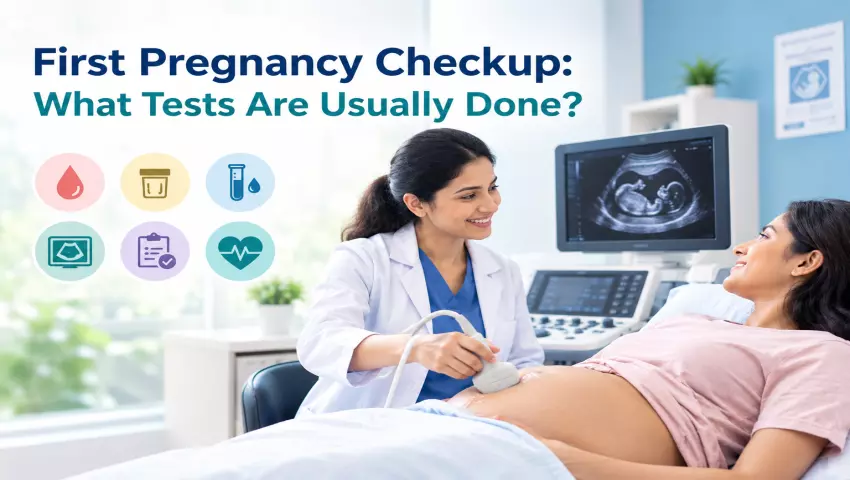
Finding out you are pregnant is a special moment. It brings joy, excitement, and a few questions. One of your first and most important steps is planning your First Pregnancy Checkup: What Tests Are Usually Done? is a common question every expectant mother has in mind during these initial weeks. Consulting the Experienced Gynecologist in Hinjewadi or a trusted Female Gynecologist in Hinjewadi ensures you get expert guidance and a safe healthcare plan right from the beginning of your pregnancy journey.
This first doctor visit confirms your pregnancy, checks your health, and helps plan safe care for you and your baby.
If you are wondering what happens during this visit, this simple guide covers all the main First Pregnancy Checkup Tests, from blood tests to your first ultrasound scan.
When to Schedule Your First Pregnancy Checkup?
Most doctors suggest booking your first checkup between 6 and 8 weeks after the first day of your last period.
However, you should visit a doctor sooner if you have:
- Severe pain in your lower stomach
- Heavy spotting or bleeding
- Pre-existing health conditions like high blood pressure or diabetes
Finding a good doctor early is very helpful. Searching online for a “first pregnancy checkup near me” can help you find experienced doctors in your
What Happens During the First Pregnancy Checkup?
Your first appointment is a detailed visit. Your gynecologist will talk with you first to understand your body and health better.
Here is what happens step by step:
- Health Discussion: The doctor asks about your last period date, previous health conditions, and any medicines you take. If you have a history of irregular periods, sharing those details helps set an accurate due date.
- Basic Health Check: They measure your weight, blood pressure, and pulse rate.
- Physical Exam: A quick, gentle checkup to see if your uterus and cervix are healthy.
Blood Tests During the First Pregnancy Checkup:
Blood tests give clear information about your internal health. They help catch small issues before they become problems.
Common blood tests include:
- Blood Group & Rh Factor: Finds your blood type and checks if your blood is Rh-positive or Rh-negative.
- Hemoglobin (CBC): Checks if you have enough blood cells or if you need iron supplements (anemia check).
- Infectious Disease Check: Tests for conditions like Hepatitis B, HIV, and Rubella to keep the baby safe.
- Blood Sugar: Checks your glucose levels to manage sugar early, especially for women who needed PCOD Treatment in Hinjewadi before conceiving.
- Thyroid Test: Checks thyroid hormone levels, which are important for your baby’s brain growth.
Urine Tests During the First Pregnancy Checkup:
You will give a small urine sample at your visit. This quick test checks for three main things:
- Protein: High protein can show stress on your kidneys.
- Sugar: Shows how your body processes energy.
- Infections (UTI): Checks for urine infections, which are common in early pregnancy and easy to treat with safe medicines.
What Does the First Pregnancy Ultrasound Check?
Your first pregnancy ultrasound (also called a first pregnancy scan or first pregnancy sonography) is an exciting milestone. It uses simple sound waves to create a clear picture of your baby inside the womb.
This early scan checks:
- Baby’s Location: Confirms the baby is growing safely inside the uterus.
- Heartbeat: Listens for the baby’s tiny heart activity (usually seen around 6 to 7 weeks).
- Due Date: Measures the size of the baby to tell you your expected delivery date.
- Number of Babies: Checks if you are having one baby or twins.
Are All These Tests Necessary for Every Pregnant Woman?
Yes. These basic tests are standard for almost every pregnant woman. When understanding your First Pregnancy Checkup: What Tests Are Usually Done?, remember that each routine test creates a safe starting point for your ongoing care.
If you are over 35 years old, have pre-existing health conditions, or conceived after receiving Infertility Treatment in Hinjewadi, your doctor may suggest close monitoring by a High-Risk Pregnancy Specialist in Hinjewadi along with extra simple tests to give you added safety.
How to Prepare for Your First Pregnancy Checkup?
A little preparation makes your appointment smooth and relaxed:
- Know Your Dates: Remember or write down the first day of your last period.
- Bring Past Reports: Carry old health records, especially if you previously had Menstrual Problems Treatment in Hinjewadi, or current medicine lists if you have them.
- Write Your Questions: Jot down any worries about foods, travel, or daily work.
- Drink Water: A full bladder helps the doctor see the baby clearly during an early stomach scan.
First Pregnancy Checkup at Goodfaith Gynecology Services:
Goodfaith Gynecology Services is a women’s healthcare clinic in Hinjewadi, Pune, led by Dr. Gargi Tripathi, Consultant Obstetrician & Gynecologist with over 20 years of experience. The clinic provides comprehensive gynecology and pregnancy care, including high-risk pregnancy care, PCOS/PCOD treatment, infertility evaluation, menstrual disorder management, menopause care, and other women’s health services. The clinic focuses on personalized, ethical, evidence-based, and patient-centered care.
Conclusion:
Knowing about your First Pregnancy Checkup: What Tests Are Usually Done? is the first supportive step toward a healthy nine-month journey. Understanding your blood tests, urine checks, and ultrasound scans helps you feel calm and confident. Early care gives your growing baby the best possible start in life.
For expert care and personal guidance, visit Goodfaith Gynecology Services to ensure a safe and memorable pregnancy experience. You can easily book an appointment with Dr. (Surg cdr) Gargi Tripathi to receive compassionate, patient-centered care right from your very first visit.
FAQs About the First Pregnancy Checkup:
A first pregnancy test in hospital is usually a simple blood test (hCG test) or a lab urine test. It measures pregnancy hormones accurately to confirm your pregnancy and begin your care with a trusted Female Gynecologist in Hinjewadi.
Home tests are very reliable after a missed period. However, if you test too early, hormone levels may be low, showing a false negative result, especially if you have been seeking Irregular Periods Treatment in Hinjewadi.
Yes, First Signal pregnancy tests are accurate when you follow the packet instructions carefully after missing your period. If you have recently received Infertility Treatment in Hinjewadi, your doctor will usually confirm the result with a blood test.
No, it does not hurt. An early ultrasound is gentle and safe for both mother and baby, helping your doctor evaluate early growth or check for issues like Uterine Fibroids Treatment in Hinjewadi.
It depends on what test you are having first. For a urine sample or an abdominal scan, you need a full bladder, whereas before a pelvic exam or transvaginal scan—often used in Endometriosis Treatment in Hinjewadi—your doctor will ask you to empty your bladder for comfort.
For most routine early pregnancy blood tests (like blood group or hemoglobin), you can eat normally. However, if your doctor has scheduled a fasting blood sugar test—which is common for women who needed PCOD Treatment in Hinjewadi—you may need to fast for 8 to 12 hours beforehand.
Your first pregnancy visit is usually the longest one, taking around 45 to 60 minutes. This gives ample time for a detailed health evaluation and creating a personalized care plan with a High-Risk Pregnancy Specialist in Hinjewadi.
Urine tests and ultrasound scans give immediate results during the visit. Routine blood test reports usually arrive within 24 to 48 hours, helping your doctor evaluate overall wellness or past concerns like Menstrual Problems Treatment in Hinjewadi.
Bring your photo ID card, the date of your last menstrual period, past health records—including previous reports for general gynecological care or Menopause Management in Hinjewadi—a list of current medications, and any questions for your doctor.