
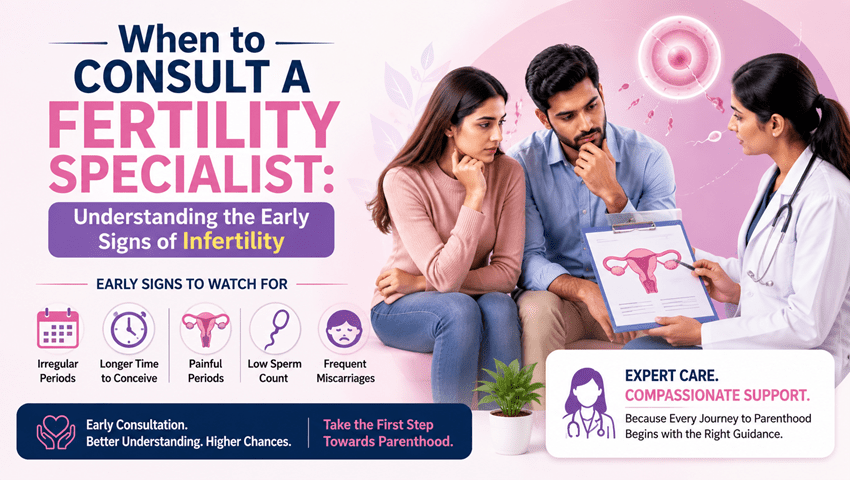
Infertility is a common reproductive health concern, yet many couples delay seeking guidance due to a lack of awareness or the misconception that they just need more time. Understanding the early signs of infertility and recognizing what is infertility, can help you take proactive, timely steps toward parenthood.
The dream of starting or expanding a family is an exciting journey, but for many couples, it can also come with unexpected challenges. If you have been trying to conceive without success, you might be wondering: When is the right time to seek medical help?
What Exactly is Infertility?
In the medical world, infertility is not defined by an absolute inability to have children. Instead, it is typically defined by a specific timeframe of unprotected intercourse without conception:
- For women under 35: Inability to conceive after 12 months of regular, unprotected intercourse.
- For women aged 35 and above: Inability to conceive after 6 months of regular, unprotected intercourse.
Because a woman’s egg quality and quantity naturally decline more rapidly after the age of 35, the window for seeking expert evaluation becomes shorter to ensure the best possible outcomes.
Early Signs Of infertility You Shouldn't Ignore:
While trying to conceive for a year (or six months) is the standard baseline, certain medical red flags suggest you should consult a fertility specialist much sooner. Here are the early signs that warrant an expert evaluation:
1. Irregular, Absent, or Extremely Painful Periods:
Your menstrual cycle is a direct reflection of your reproductive health.
- Irregular or absent periods often indicate ovulation issues—if you aren’t ovulating regularly, it becomes incredibly difficult to track your fertile window.
- Severe pelvic pain or debilitating cramps during your period could be a symptom of underlying conditions like Endometriosis or Uterine Fibroids, both of which can significantly interfere with fallopian tube function or embryo implantation.
2. Known Hormonal Imbalances (PCOS/PCOD):
Polycystic Ovary Syndrome (PCOS) is one of the leading causes of female infertility. It causes hormonal imbalances that disrupt normal egg development and release. If you have been diagnosed with PCOS, have a history of adult acne, sudden weight gain, or irregular facial hair growth, waiting a full year before seeking fertility guidance is unnecessary. Early ovulation monitoring and tracking can drastically improve your chances.
3. A History of Multiple Miscarriages:
Conceiving is only the first step; maintaining a pregnancy is the next. If you have experienced two or more consecutive miscarriages, it is highly recommended to seek an evaluation. Recurrent pregnancy loss can be tied to genetic factors, uterine abnormalities, or hormonal challenges that require specialized medical management.
4. Male Fertility Factors:
Infertility is not solely a female health issue. Statistically, about one-third of infertility cases are linked to male factors, one-third to female factors, and the remaining to a combination of both or unexplained causes. Early signs of male fertility challenges include structural issues, low sperm count, poor sperm motility, or a history of testicular injury or surgeries.
Why Early Evaluation Matters?
Delaying a fertility consultation can often escalate stress and limit your treatment options, especially as age factors into reproductive health. An early evaluation does not automatically mean undergoing invasive procedures. More often, it starts with a clear, step-by-step diagnostic plan:
- Detailed medical history evaluation
- Hormonal testing and blood panels
- Ovulation monitoring and pelvic ultrasounds
- Lifestyle, diet, and stress counseling
By identifying the root cause early—whether it is a minor hormonal shift or a structural issue—you can benefit from simple, non-invasive treatments, such as lifestyle modifications or basic ovulation induction, before exploring advanced reproductive technologies.
Take Your First Step with Dr. Gargi Tripathi at Goodfaith Gynecology Services:
If you recognize any of these early signs, or if you have reached the 6 to 12-month mark of trying to conceive, you do not have to navigate this emotionally challenging path alone. Expert, compassionate, and ethical medical advice can change your entire perspective.
For couples in Pune, Dr. Gargi Tripathi at Goodfaith Gynecology Services offers premium, comprehensive infertility evaluation and guidance.
Why Consult Dr. Gargi Tripathi?
- 20+ Years of Clinical Expertise: As a senior Obstetrician, Gynecologist, and a retired Surgeon Commander from the Indian Navy, Dr. Gargi brings exceptional discipline, clinical precision, and ethical standards to reproductive medicine.
- Root-Cause Analysis: She focuses on a patient-centered, evidence-based approach—taking the time to listen, accurately diagnose the root issue, and formulate customized treatment plans tailored to your specific body and lifestyle.
- Comprehensive Care Under One Roof: From managing underlying causes like PCOS and endometriosis to offering step-by-step fertility tracking and seamless transition into complete pregnancy and high-risk maternity care, your reproductive health journey is fully supported.
Your dream of parenthood is precious. Let specialized medical expertise give you the clarity and support you deserve.